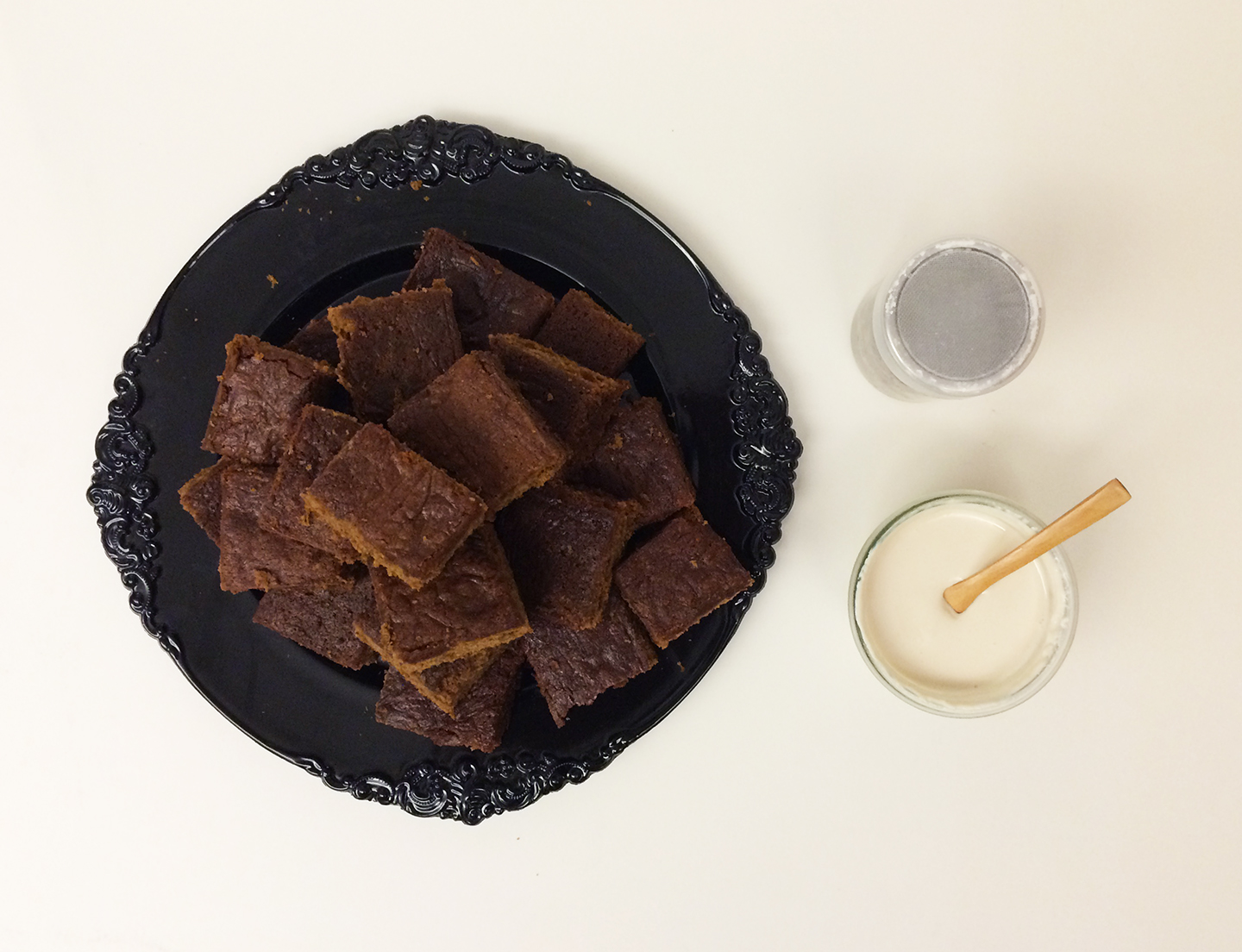
Dream Gingerbread (Project VICTORIAN CAKES)

It was Caroline's Aunt Sophie who brought Dream Gingerbread into the Campion home. The recipe was given to Sophie by her mother  (Caroline's maternal great-grandmother), and was one of family lore. As the tale was told, Sophie's mother "made the cake in a beautiful dream one night, and waking, was so impressed by the quality of her dream cake that then and there she flew to her kitchen in nightcap and gown and made a cake exactly like the one in her dream."

Gingerbread has been around since at least the Middle Ages, and save texture differences, has not changed all that much since then. Beyond the charming name, this is a pretty typical specimen, redolent with molasses, not too spicy. I remember reading somewhere that the Victorian palate veered towards the bland, so perhaps to the 18th century this cake would have had quite a bite, but to today's standards it rather mellow. A kid-friendly kind of gingerbread.

What really drew me to bake this cake was not the cake itself but rather the brief quip about Aunt Sophie preferring it topped with nothing more than a paste of brown sugar and sour cream. I've had that combination in crepes, but never once thought of trying a dollop on a cake. 

I brought the cake into work with both the sugared sour cream as well as powdered sugar, and let people pick their poison. Going with Sophie's choice myself, I rather liked the tang in contrast to the spice and can imagine it's even better when the spice is kicked up a notch. 

Dream Gingerbread
Adapted from Victorian Cakes by Caroline B. King

1/2 cup (113 g) soft shortening
1/2 cup (1 stick; 113 g) softened unsalted butter
1 cup (220 g) dark brown sugar
1 cup (336 g) unsulphured molasses
1 cup (240 g) sour milk or buttermilk
2 large eggs
1 T powdered ginger
1/2 t each powdered cinnamon and mace (you can use nutmeg)
3 1/2 c (437 g) all-purpose flour

Preheat your oven to 350° and prepare a 9" x 13" baking pan.
Whisk together the flour and spices and set aside. Beat the shortening, butter, brown sugar, and molasses on medium-high speed until thoroughly whipped and lighter in color. Add each egg, one at a time, beating well before cracking in the next. Stop and scrape the bowl! On low speed, alternate adding the flour/spice mixture with the sour milk in three additions, beginning and ending with the dry. Stop before all of the dry has disappeared and mix the rest in by hand. Smooth the batter into the prepared pan and bake for 32-35 minutes, or until a cake test comes back with just a few stragglers and the cake starts pulling away from the sides of the pan.

Let cool for 10 minutes in the pan, then remove to a rack to cool completely. Serve with Sugared Sour Cream (I mixed 1/2 c sour cream and 1/4 c brown sugar), powdered sugar, or plain.
The Cake Breaker

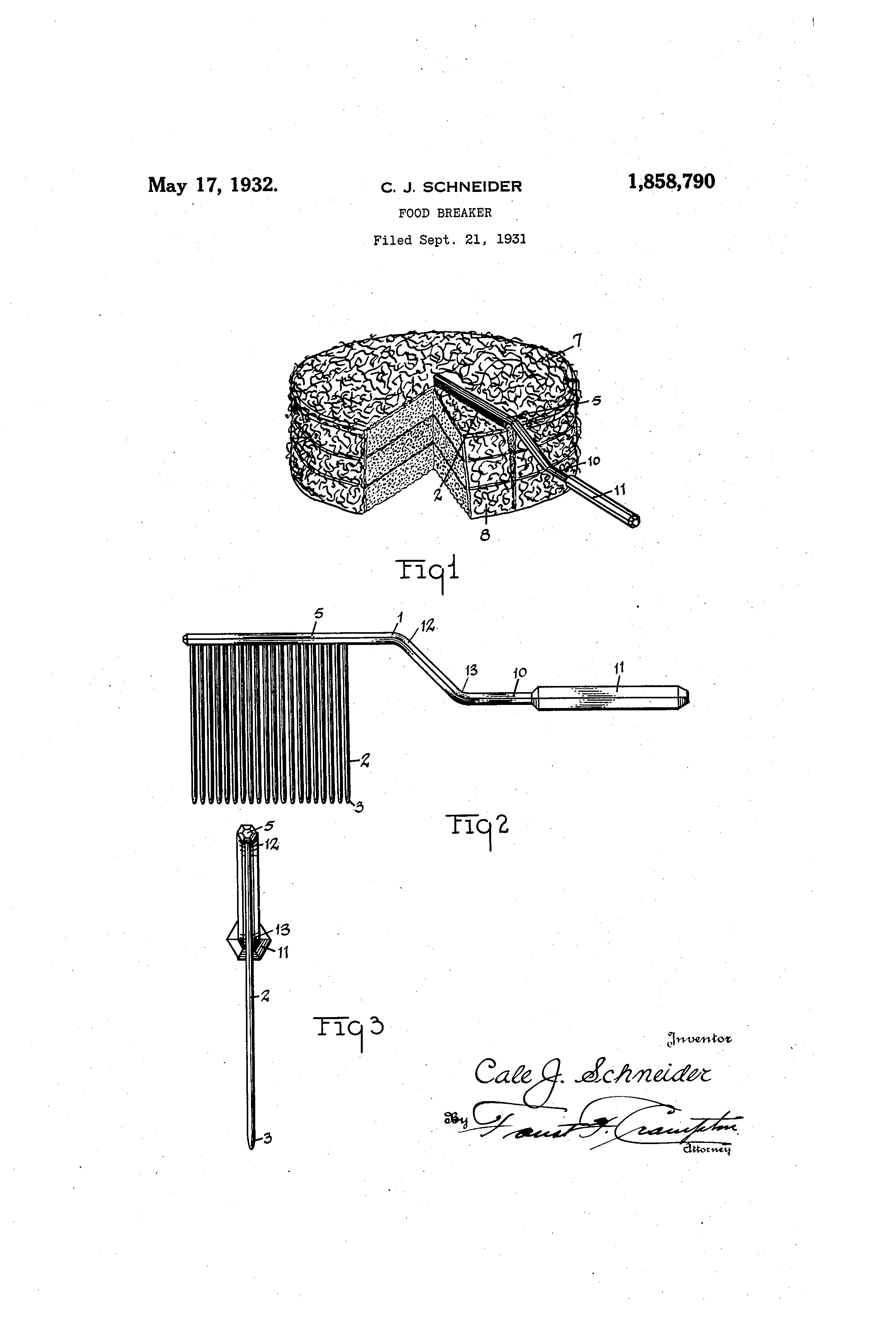
It is possible you've never seen one of these—or even know what it is—but in the mid-20th century, it could be found in almost every American kitchen. . 

Patented as the Food Breaker in 1932, this multi-pronged metal and bakelite tool was the invention of an Ohio man named Cale J. Schneider. Though able to serve a variety of "food breaking" needs, it was primarily marketed as a way to slice cake without putting any undue pressure on the delicate beast; Angel Food Cakes, and their ilk, were particularly  susceptible to the squash-factor. 

Click HERE to see the Food Breaker patent in its entireity

Following his death in 1971, the New York Times ran an obituary on May 29th in which Schneider is described as the inventor of a "cake breaker to slice the softest cake . . . currently in use as a comb for Afro-American coiffures." 

There are plenty of original Schneider Cake Breakers available online from Etsy or Ebay, and a few firms still manufacture them today. 

Side note: Schneider also invented sweet corn holders called Kob Knobs and a Food Slicer. The guy was really into prongs.

One Month Later

Today is the last day of my one-month sabbatical. 

I knew going into it that the very first week would be dedicated to KonMari and spring cleaning, to a fresh start. It was an exhausting, rewarding week which I ended prepared to dive right into three weeks of research and working more on the Victorian Cakes project, as well as daily blog writing and baking and photographing. I was not going to waste this amazing opportunity (this gift!). I would be so, so productive and I was going to figure. it. all. out.

And I sure thought I would get a long-form post done on my cake interpretation of The Lottery by Shirley Jackson:

Two layers of black chocolate cake with blood-red filling and sky blue frosting. Adorned with a "profuse" amount of flower sprinkles, chocolate stones, a hand-made 3-legged stool, and an aged black box containing tiny slips of paper. Before the icing was applied, I slipped one large piece of paper onto which was placed a single smeared dot into the cake; a surprise for one taster.

Or post the recipe for the Whole Wheat Mixed Berry Snacking Cake I baked:

See the end of the post for recipe

Or even manage to post a CakeBook Monday selection every Monday. 

What really happened, at least during the majority of the second and third weeks, is that I slept (a lot), watched tv ("not too much"), tried to adopt a smoothie habit (sort of worked), read books (heaven), and baked as much as I could. I thought and made lists. I tinkered on this website and paced my apartment and did some research and generally tried to avoid beating myself up for not doing what I told myself I would (produce). 

Because on Tuesday, I go back to working my day job (missed you guys!) and trying to do everything else, including be a mom and a wife and a reasonably clean person, after the kid has gone to bed, on weekends, or at the crack of dawn. And so I woke up today, the last day, with that same feeling I felt all throughout college when a paper I'd neglected for weeks was due: a heavy weight and a pressure to meet the deadline. 

But I now know what I didn't then, that I work well under pressure and like a tight deadline. And the only one making these deadlines in me. So, Jess, lay off.

Permission granted, weight lifted, I was finally able to get something done. In a sudden burst, I decided to re-name my website and all of my social media handles to reflect what I have been calling what I do for some time now: The Cake Historian. So there's that.

I'll also say that CakeBook Monday is moving to Instagram. I'm good at doing that everyday, but try as I might, I am not a regular blogger. That said, I am aiming to post a longer piece here once a week that will focus on the reason for Cakewalk as stated in the subtitle: exploring stories, history, and identity through cake. Oh, and with a recipe. Recipes are good. 

Speaking of, I suppose it's not too late to give you one now...

Whole Wheat Mixed Berry Snacking Cake

This is a quick and easy cake that can be mixed entirely by hand. If you've never baked with mayo before, don't let that turn you off—it's just egg and oil! Thanks eternal to Jessie Sheehan for the tip to freeze the mix-ins as well as for the recipe for Chocolate Chip Snack Cake that this is based off of. 

Preheat oven to 350°
Prepare a 9 x 13 pan with butter or spray. Parchment the bottom.

1 c (126 g) frozen mixed berries
2 T flour (any kind)

2 cups (240 g) Whole Wheat Pastry Flour
1 T (18 g) baking powder
1 t cinnamon
1/2 t salt
1/2 c (112 g) mayonnaise
1/4 c (56 g) neutral oil 
1/2 c (100 g) sugar
3/4 c (165 g) brown sugar
2 large eggs
1 t vanilla extract
1 c (240 g) sour cream

Chop up the frozen berries into small pieces. In a small bowl, toss the pieces with the flour to coat, then put the bowl in the freezer until you have mixed the batter.

In a large bowl, whisk together the flour, baking powder, cinnamon, and salt. Set aside.

In another large bowl, thoroughly whisk together the mayonnaise and oil with both sugars, followed by the eggs. Once they are fully incorporated, whisk in the extract and the sour cream. 

Using a rubber spatula and a light hand, gently fold the frozen mixed berries into the batter; spread into the pan.

Bake for 30-35 min until a cake test comes back clean. 

Cool in the pan for ten minutes before removing to a rack to cool completely. Serve dusted with confectioners sugar if desired. 

CakeBook Monday (on Tuesday): IMPORTANT ARTIFACTS by Leanne Shapton

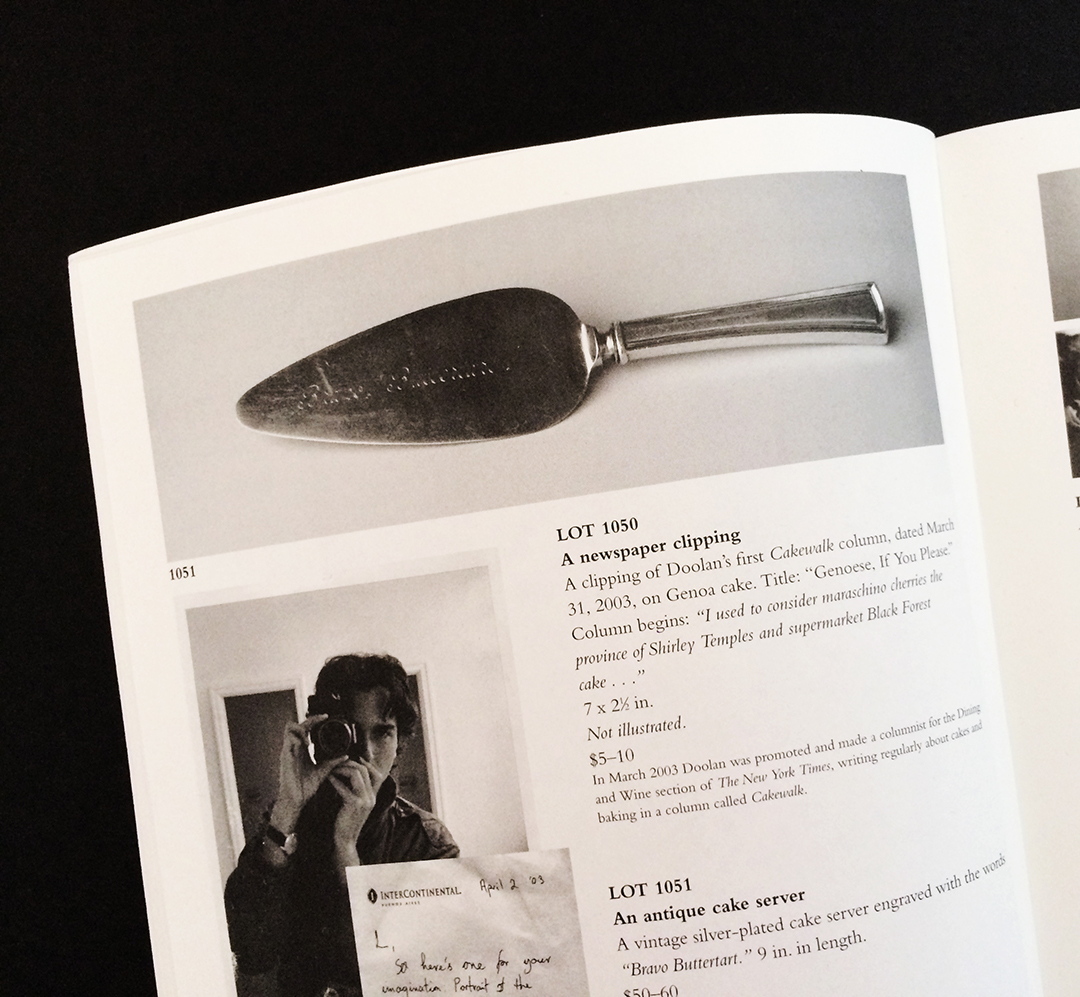
I find it hard to explain this book, or even remember the mouthful of a title, Important Artifacts and Personal Property from the Collection of Lenore Doolan and Harold Morris, Including Books, Street Fashion, and Jewelry, in its entirety, but it is one that I treasure. Art-meets-novel, its creator, Leanne Shapton, uses words and images to tell the story of a relationship in an unusual format: an auction catalog. Designed from cover-to-cover to replicate an actual catalog, it features the contents of one couples now dissolved relationship up for sale. Cool, huh?

But what does this have to do with cake? Quite a lot, actually. The female protagonist—Lenore—pens a column about cakes and baking for the New York Times called Cakewalk. I'd forgotten all about this detail until I was scanning my bookshelves for CBM and, drifting beyond the baking book shelves, spotted Important Artifacts and knew immediately it belonged here. 

So much of what I love about cake is not just the deliciousness or the celebratory dress it always wears, but the way that cake fits into the narrative of our lives and our history (hence, the focus of this blog as stated in the subtitle) as well. Just the way that a person or a pet or even old t-shirt can be a character in a story—real or imagined—cake can too. And it does it so well here.

CakeBook Monday: BIRTHDAY CAKES by Kathryn Kleinman

This spectacular collection of birthday cakes features a quirky range of recipes and stories from bakers such as Alice Medrich, James Beard, Julia Child, and Maida Heatter. Julia Child's contribution, Le Kilimanjaro, is a cone-shaped ice cream cake that features a fire gently burning in the shell of half an egg placed a top. There's even the recipe for Vert-vert (Green Cake) which was baked every year at Giverny for Claude Monet by his cook, Marguerite. 

It's out-of-print (seems to be my forté), but available online for just a few cents.